CircuitWare

Edge AI in IP Cameras: Real-Time Video Intelligence Without the Cloud

Edge AI moves detection, recognition, and decision-making onto the camera itself, so video turns into action in milliseconds, on-site, and without streaming everything to the cloud.

What Is Edge AI in an IP Camera?

Edge AI in an IP camera means the camera runs computer vision models, such as object detection, people counting, or license plate recognition, directly on a processor inside or beside the device. Instead of pushing a constant video stream to a remote server, the camera turns raw pixels into decisions and structured metadata locally, in real time.


The result is a smarter sensor: it does not just record what happened, it understands what is happening and acts on it. That shift, from streaming pixels to producing insight at the point of capture, is what makes edge AI the most important change in video surveillance and industrial vision today.
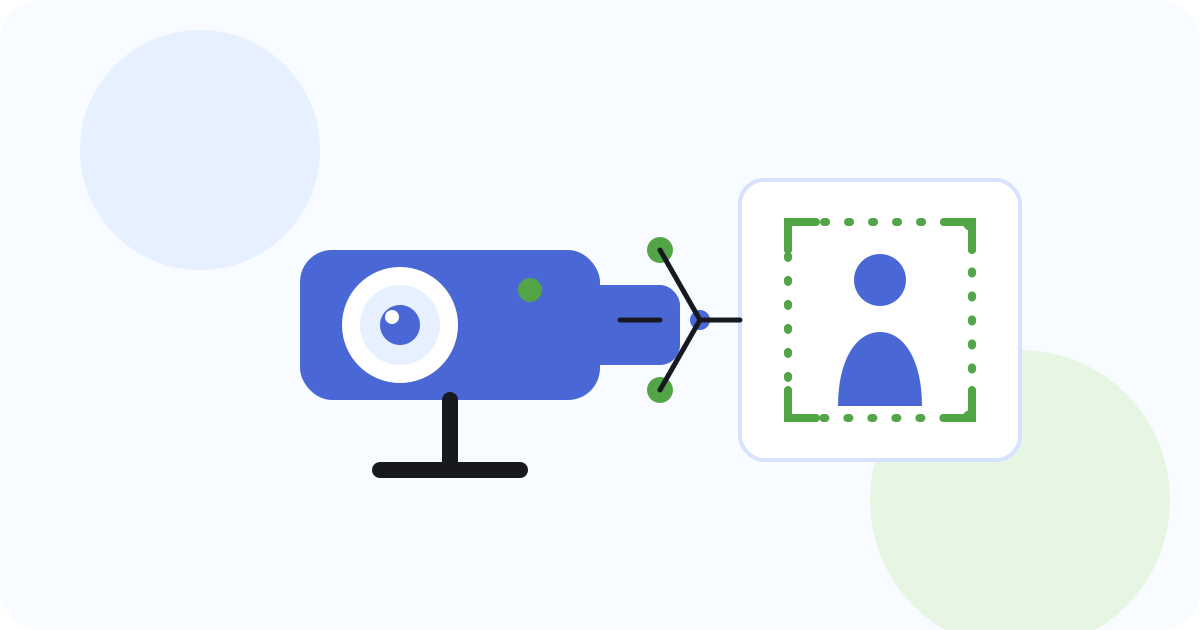
Edge AI IP camera detecting a person inside an on-device bounding box

The Challenges Companies Face With Cloud-Based Cameras

Most organizations started with IP cameras that send video to a central recorder or the cloud for analysis. As deployments grow, that architecture runs into hard limits. These are the problems teams tell us they are trying to solve.

Runaway Bandwidth and Cloud Costs
Streaming continuous high-resolution video from dozens or hundreds of cameras saturates networks and creates recurring upload, compute, and storage bills that scale linearly with every camera added.
Latency That Misses the Moment
A cloud round-trip of even one to two seconds is too slow for safety alerts, access control, or stopping a process. Real-time events demand real-time decisions, not a delayed verdict.
Privacy and Compliance Exposure
Sending raw footage of people, faces, and plates off-site multiplies regulatory risk under GDPR and similar rules, and widens the attack surface for sensitive video data.
Fragile Connectivity
Remote sites, vehicles, and industrial floors rarely have reliable, high-bandwidth links. When the network drops, a cloud-dependent camera goes blind exactly when it is needed most.
Alert Fatigue From Dumb Triggers
Motion-only detection floods operators with false alarms from shadows, weather, and animals. Without on-device intelligence, teams stop trusting the alerts.
Hard-to-Scale Integration
Adding AI to cameras means matching sensors, interfaces, processors, thermal limits, and update strategy. Without the right architecture, every new model or site becomes a custom project.

Why Companies Need Edge AI in Their Cameras

Decisions in Milliseconds
Local inference reacts to people, vehicles, and events the instant they appear, enabling immediate alerts, access decisions, and machine responses with no cloud round-trip.
Dramatically Lower Operating Cost
The camera transmits only events and metadata, not raw video. Bandwidth, cloud compute, and storage costs fall sharply and stop scaling with every camera you deploy.
Privacy by Design
Footage can be analyzed and discarded on-device, with only anonymized counts or flagged events leaving the camera, which simplifies compliance and reduces exposure.
Resilience When It Matters
Because the intelligence lives on the device, the system keeps detecting and recording locally even when connectivity is intermittent or completely offline.

What Goes Into an Edge AI Camera System?

The Right Sensor and Optics

Resolution, frame rate, dynamic range, and low-light performance must match the workload. A plate-reading camera, a people counter, and an outdoor safety camera each demand different imaging choices.

An AI-Capable Processor

Energy-efficient vision SoCs suit compact, battery-aware smart cameras, while higher-performance modules such as NVIDIA Jetson handle multi-stream, high-resolution, or multi-model workloads at the edge.

A Robust Camera Interface

MIPI CSI-2 works for short, on-board connections, while serializer interfaces such as GMSL and FPD-Link carry video reliably over long, rugged cable runs in vehicles, machines, and outdoor installations.

Embedded Software and Updates

Dependable model execution, data handling, telemetry, and secure over-the-air updates keep the camera accurate and improvable across its full deployed lifetime.

Where Edge AI Cameras Deliver Value Today

People Detection and Counting
Occupancy, footfall, and queue analytics for retail, transport hubs, and smart buildings, computed on-device.
License Plate Recognition
Real-time vehicle access, parking, and tolling that work locally without uploading every frame.
Perimeter and Intrusion Alerts
Person and vehicle classification cuts false alarms so operators trust every notification.
Access Control and Identification
Face and credential checks at the door with low latency and footage that stays on-site.
In-Cabin and Driver Monitoring
On-device attention and presence detection for vehicles where connectivity is unreliable.
Industrial Safety and Inspection
Detecting hazards, PPE compliance, and defects at the point of capture on the factory floor.
Smart Retail Analytics
Shelf, queue, and shopper insights generated as metadata rather than streamed video.
Critical Infrastructure
Field equipment that stays intelligent and recording even with intermittent network access.

How CircuitWare Builds Edge AI Camera Systems

Right-Sized Vision Hardware

We match the sensor, optics, processor, and accelerator to the actual model and environment, so the camera meets its accuracy and latency targets without overbuilding cost, power, or heat.

Reliable Camera Integration

From MIPI CSI-2 to GMSL and FPD-Link serializer links, we design the imaging and interface path so video reaches the AI processor cleanly across the distances and conditions your deployment demands.

Deployment-Aware Embedded Software

We build the embedded stack around model execution, observability, security, and over-the-air updates so the system stays accurate and supportable long after launch, not just on day one.

Frequently Asked Questions

What is edge AI in an IP camera?

It means the camera runs computer vision models such as detection, counting, or recognition directly on a local processor, turning pixels into decisions and metadata in real time instead of streaming video to the cloud for analysis.

Why move video analytics to the edge instead of the cloud?

Edge analytics cut latency to milliseconds, remove the bandwidth and storage cost of streaming continuous video, keep sensitive footage on-site for privacy and compliance, and keep working even when the network drops.

What hardware powers an edge AI camera?

An image sensor paired with an AI-capable processor. Energy-efficient vision SoCs suit compact smart cameras, while modules such as NVIDIA Jetson handle multi-stream or high-resolution workloads. Camera input uses MIPI CSI-2 for short runs or GMSL and FPD-Link for long, rugged cabling.

What can edge AI cameras actually do?

Common workloads include people detection and counting, intrusion alerts, license plate recognition, face identification for access control, retail and queue analytics, in-cabin monitoring, and industrial safety and quality inspection.

Move Intelligence Onto the Camera

Build IP Cameras That See, Understand, and Act on Their Own

CircuitWare helps teams turn edge AI ambitions into reliable camera systems, with the sensor, processor, interface, and embedded software needed for fast, private, and scalable video intelligence.