
CircuitWare

AI Chips for IoT Devices: How to Choose Smarter Edge AI Hardware

Learn how AI chips for IoT devices improve edge inference speed, power efficiency, and on-device intelligence across connected products.

Choosing AI Compute That Fits the Edge

IoT systems increasingly need local intelligence, but they rarely have the power, thermal budget, or connectivity profile of cloud-class hardware. AI chips for IoT devices close that gap by delivering targeted acceleration where it matters most.
The right edge AI hardware choice depends on the model, sensing pipeline, memory requirements, latency target, and how long the device must operate in real-world field conditions.
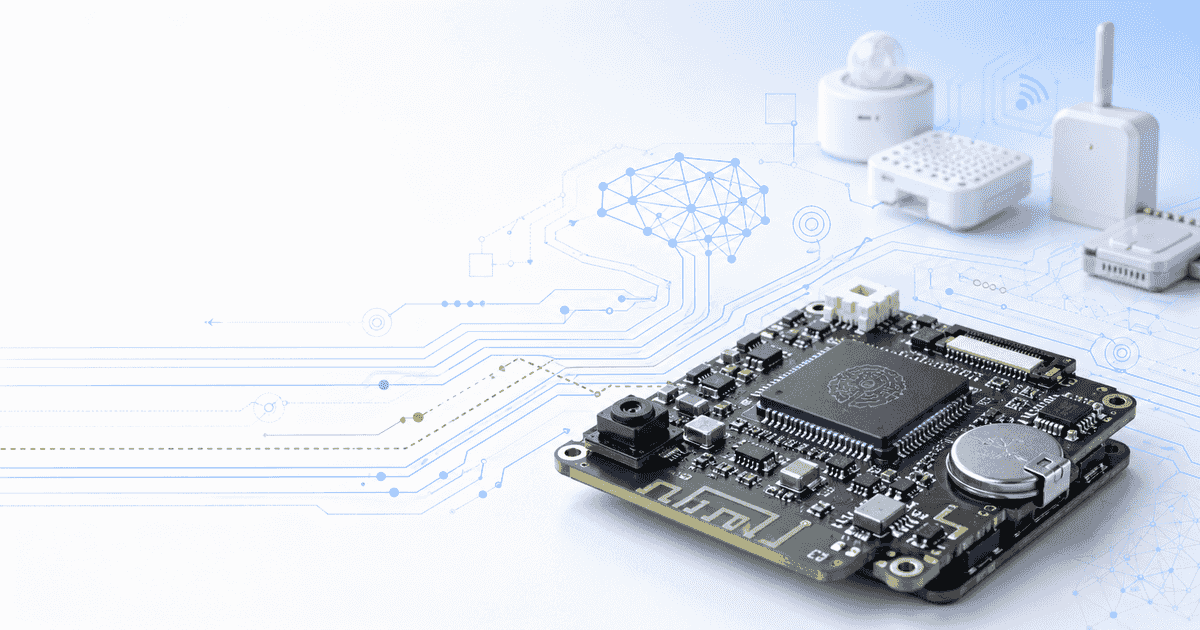
AI chip for IoT illustration

Why Specialized AI Chips Matter in IoT Devices

Lower Inference Latency
Dedicated acceleration reduces delay for computer vision, anomaly detection, and other time-sensitive edge workloads.
Improved Power Efficiency
Purpose-built data paths and memory handling can outperform general processors at a much lower energy cost.
Less Cloud Dependence
On-device inference reduces bandwidth usage and keeps systems useful even when connectivity is limited.
Stronger Privacy Posture
Keeping more processing local can reduce exposure of sensitive audio, video, or operational data.

Core Design Questions for AI-Enabled IoT Hardware

What Workload Must Run?

Detection, classification, fusion, and predictive maintenance pipelines all place different demands on compute, memory, and latency.

How Often Does It Infer?

Always-on sensing versus burst processing changes the right balance between accelerator, microcontroller, and power-management strategy.

What Is the Thermal Envelope?

Small devices, sealed enclosures, and outdoor environments place hard constraints on how much AI compute the system can sustain.

How Will It Be Updated?

Edge AI programs need a strategy for firmware, model, and telemetry updates over the product's deployed lifetime.

High-Value Use Cases for AI Chips in IoT Devices

Industrial Sensing
Local anomaly detection helps flag problems without constant cloud streaming.
Smart Cameras
Real-time inspection and filtering can happen directly at the point of capture.
Portable Devices
Battery-powered products gain responsiveness without relying on remote inference.
Connected Infrastructure
Field systems can stay useful even when network access is intermittent.

What Teams Need Beyond the AI Chip

Balanced Hardware Architecture

Accelerators only perform well when storage, sensing, memory bandwidth, and interfaces are aligned with the workload.

Efficient Embedded Software

Scheduling, data movement, model management, and power-state control are just as important as raw silicon capabilities.

Deployment Planning

The long-term success of an IoT AI product depends on update strategy, observability, and serviceability after launch.

Choose the Right Edge AI Platform for IoT

Build IoT Devices That Think Locally and Efficiently

CircuitWare helps teams match AI workloads to practical edge hardware so products stay fast, dependable, power-aware, and ready for deployment at scale.