
CircuitWare

AI in Circuit Design for Faster, Smarter Hardware Engineering

Learn how AI in circuit design improves schematic review, component selection, layout analysis, and verification without replacing engineering judgment.

How AI Improves Circuit Design Workflows

Artificial intelligence is changing circuit design from a purely manual exercise into a faster, more informed engineering workflow. Teams now use AI in circuit design to compare architectures, validate tradeoffs, and surface issues earlier in the hardware development cycle.
At CircuitWare, AI is most valuable when it supports engineers with better visibility into signal integrity, thermal behavior, manufacturability, and component selection while keeping final technical decisions in expert hands.
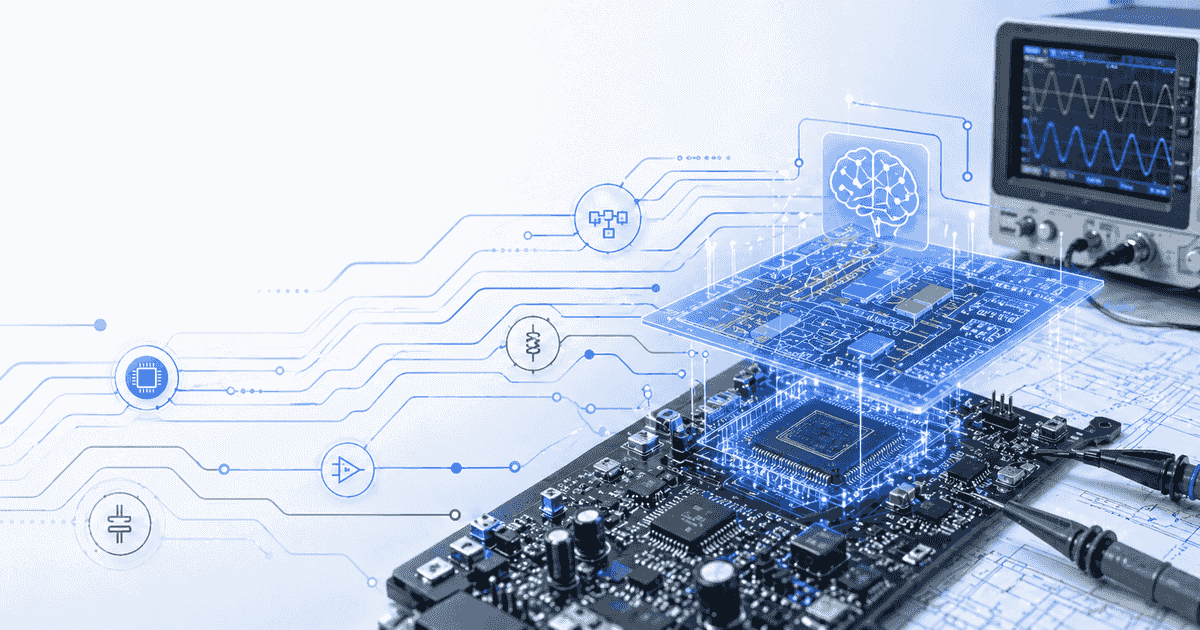
AI circuit design illustration

Key Benefits of AI in Circuit Design

Automated Schematic Exploration
AI can evaluate multiple topology options quickly, helping engineers compare approaches before committing to detailed implementation.
Smarter Component Selection
Design teams can rank parts against cost, performance, availability, and lifecycle risk with better context than spreadsheet-only reviews.
Layout Risk Detection
Pattern-based analysis helps flag likely congestion, return-path issues, and thermal hotspots earlier in PCB layout work.
Faster Verification Cycles
AI-assisted checking helps teams focus simulation and review time on the issues most likely to affect performance or manufacturability.

Where AI Fits in the Circuit Design Workflow

Concept Definition

AI helps organize requirements, compare interface strategies, and identify architectural tradeoffs that should be validated before schematic work begins.

Design Execution

During implementation, AI can suggest reusable blocks, support layout review, and prioritize design-rule checks that matter most for the target application.

Validation

Test data, prototype measurements, and simulation outputs become more useful when AI helps identify patterns that would otherwise take much longer to isolate manually.

Production Readiness

AI-informed reviews can improve manufacturability, sourcing resilience, and documentation quality before a design enters pilot or scaled production.

Real Hardware Engineering Outcomes

Shorter Design Iterations
Teams can make confident revisions sooner because risk signals appear earlier.
Better Tradeoff Decisions
Performance, power, cost, and reliability choices are easier to compare in context.
Stronger Cross-Team Reviews
Hardware, firmware, test, and manufacturing teams can align around shared evidence.
Lower Late-Stage Rework
More issues are caught when they are still inexpensive to fix.

What Successful AI-Assisted Design Teams Get Right

High-Quality Input Data

AI recommendations are only as reliable as the design history, constraints, and validation data available to the model or workflow.

Human Review at Every Stage

Strong engineering teams use AI to accelerate judgment, not replace it. Experienced review remains essential for safety, compliance, and real-world robustness.

Tooling That Fits Existing Work

The best results come when AI supports current EDA, simulation, and review workflows instead of forcing teams into disconnected one-off processes.

Use AI in Circuit Design More Effectively

Bring AI Into the Right Parts of Your Hardware Workflow

We help teams apply AI where it creates real engineering leverage, from design exploration and validation planning to manufacturability and optimization reviews.